Biomechanics and Human Movement Research
Developed and co-led $1M biomechanics data collection projects, and automated data processing and visualization for 100+ GB of data, cutting manual processing time by 90%.
Tools: Experiment design, Human subject research, Python, MATLAB, Motion capture, Delsys Trigno, DAQ, Blender
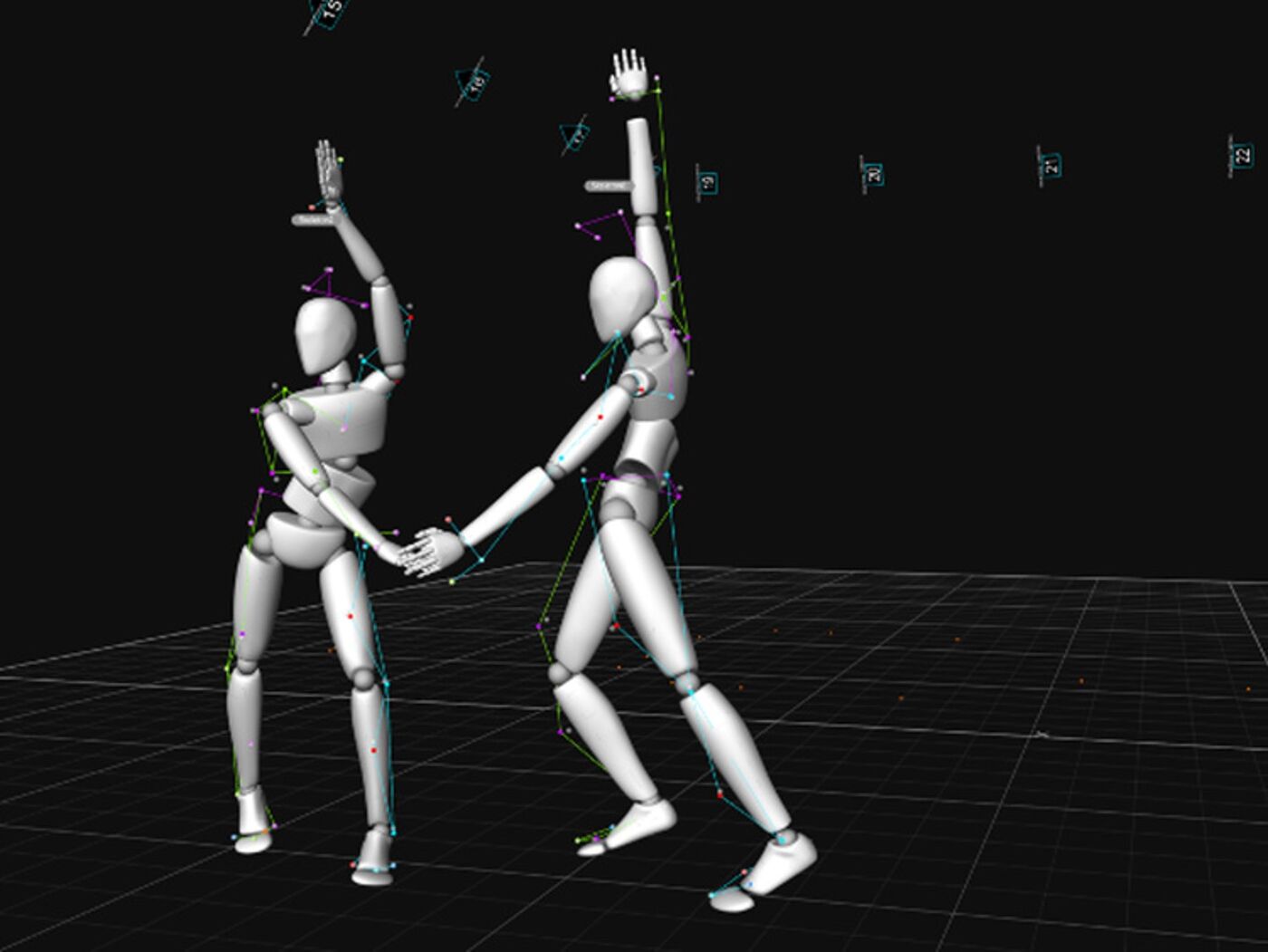
I spent several semesters working with Dr. Praneeth Namburi at MIT Immersion Lab on various cool projects investigating efficiency of human gait. Below are some of the highlights of my work there.
Several publications have come out of the lab, related to my work:
(2025) Efficient elastic tissue motions indicate general motor skill Praneeth Namburi, et al., Nature Scientific.
(2023) A comparison of point-tracking algorithms in ultrasound videos from the upper limb U Magana-Salgado, P Namburi, M Feigin-Almon… - BioMedical Engineering OnLine, 2023
Feb 28, 2022. Article on the documentary Why We Dance by the Canadian Broadcasting Corporation. The documentary Why We Dance covers some of the work we did with dancers to improve communication between the dancer and the coach using augmented reality.
May 26, 2021. News article covering the pilot work with MIT’s pitching coach Todd Carroll.
-----------------------------------------
Exploring the efficiency of human movement at the MIT.nano Immersion Lab.
- Developed and led $1M biomechanics data collection projects
- Designed a novel actuation mechanism for tensegrity structures inspired by human movement
- Developed a 1 ms precision clock system to synchronize real-time multimodal movement and muscle observation
- Wrote custom scripts (Python, bash, Blender) to automate processing and visualization of 100+ GB of data, reducing manual processing time by 90%
Skills: MATLAB, Blender, pandas, NumPy, SciPy, DAQ, ffmpeg, Arduino, RealityCapture, Motive, Delsys Trigno, git.
Highlighted project: music and muscle synchronization
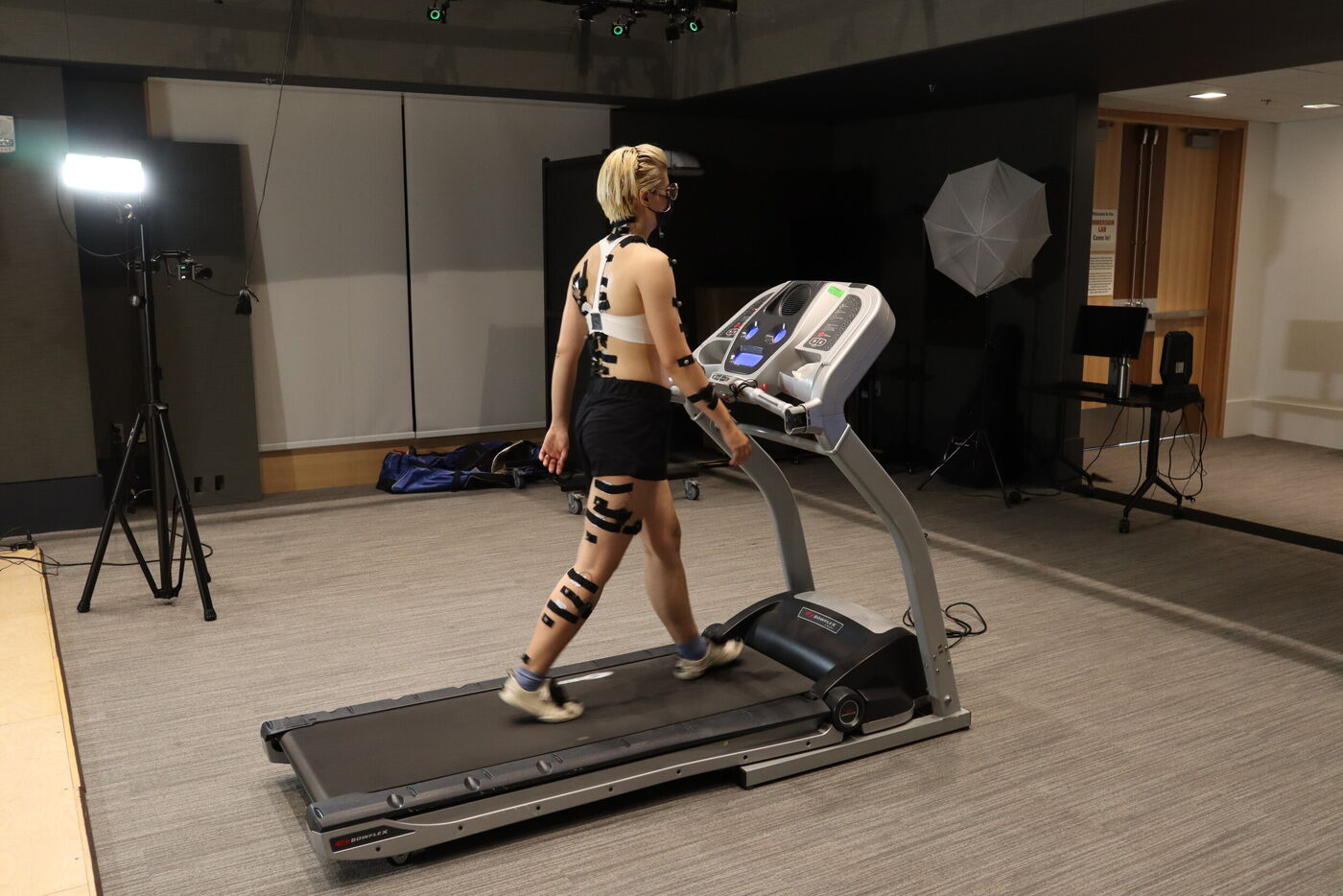
Example of the setup and the subject during data collection.
After collecting promising preliminary data and discussing our findings with experts across dance, physical therapy, sports and robotics, I started a human subject research study. I:
- wrote the protocol for 3 studies (approved by the Institutional Review Board)
- recruited 40+ subjects in Boston and led communication before, during and after the study
- trained and guided 5 students during data collection sessions
- co-authored a pipeline to process 10+ GB of raw data
Special thanks to Dr. Praneeth Namburi for his mentorship.
Tools
With OptiTrack motion capture, IR markers placed on the skin along muscles and muscle lines capture periodic muscle length changes, so we can analyze how muscle synchronization affects the stability and efficiency of movement. We also used Delsys Trigno sensors (EMG, FSR, accelerometer).
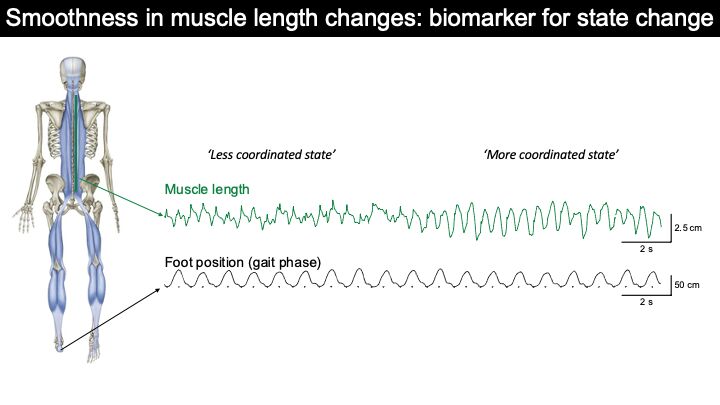
Muscle length oscillations during running.
Tensegrity robot
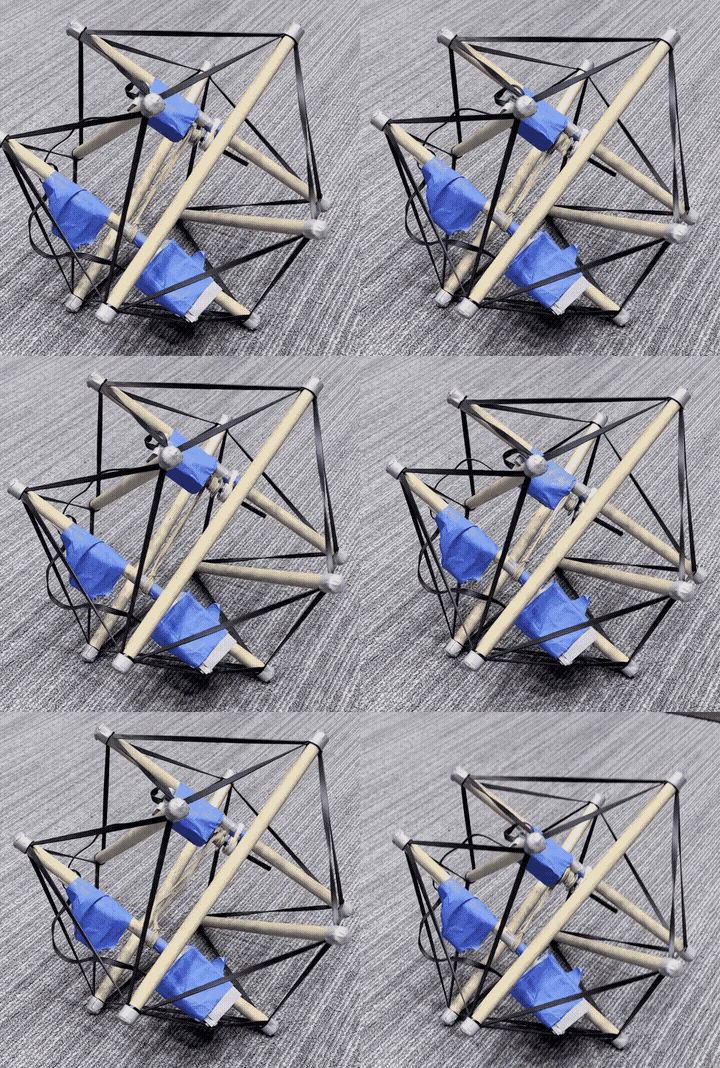
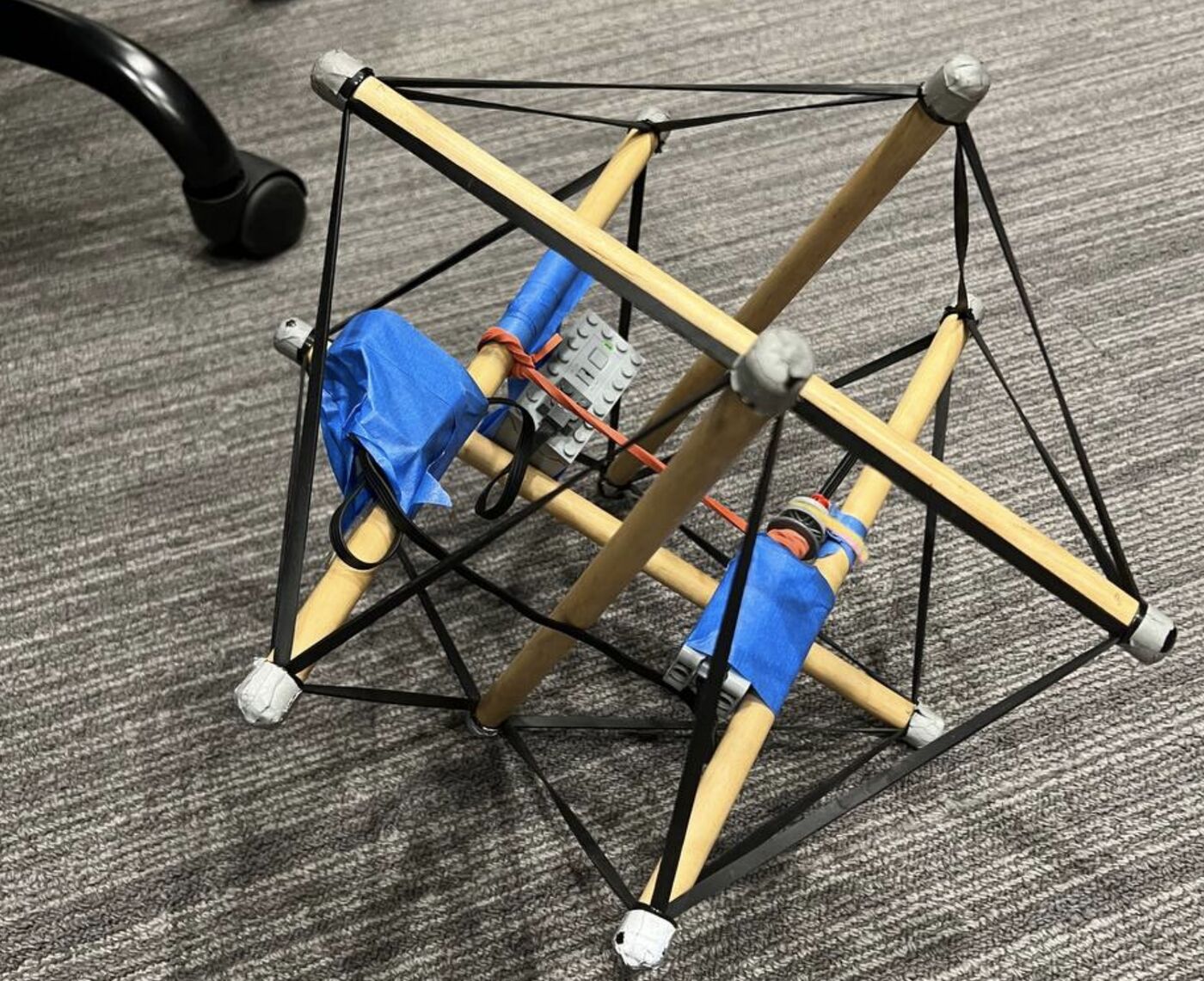
Tensegrity robot, early prototype, summer 2022.
Tensegrity (tensional integrity) is a structural principle based on isolated components under compression inside a network of continuous tension. The human body can be described this way: bones are suspended by muscles and other soft tissue.
The most common model of the body is a rigid spring-damper system. It is often oversimplified, since it doesn't account for over 60% of the energy stored and dissipated in soft tissue, yet these models are used to develop prosthetics and robots. I use modern tools to build better tensegrity models of human movement and efficient tensegrity robots that mimic muscles.
Design requirements: 1-DOF actuation of a predefined tensegrity ball, with organic movement that mimics a core contraction-expansion cycle (like breathing).
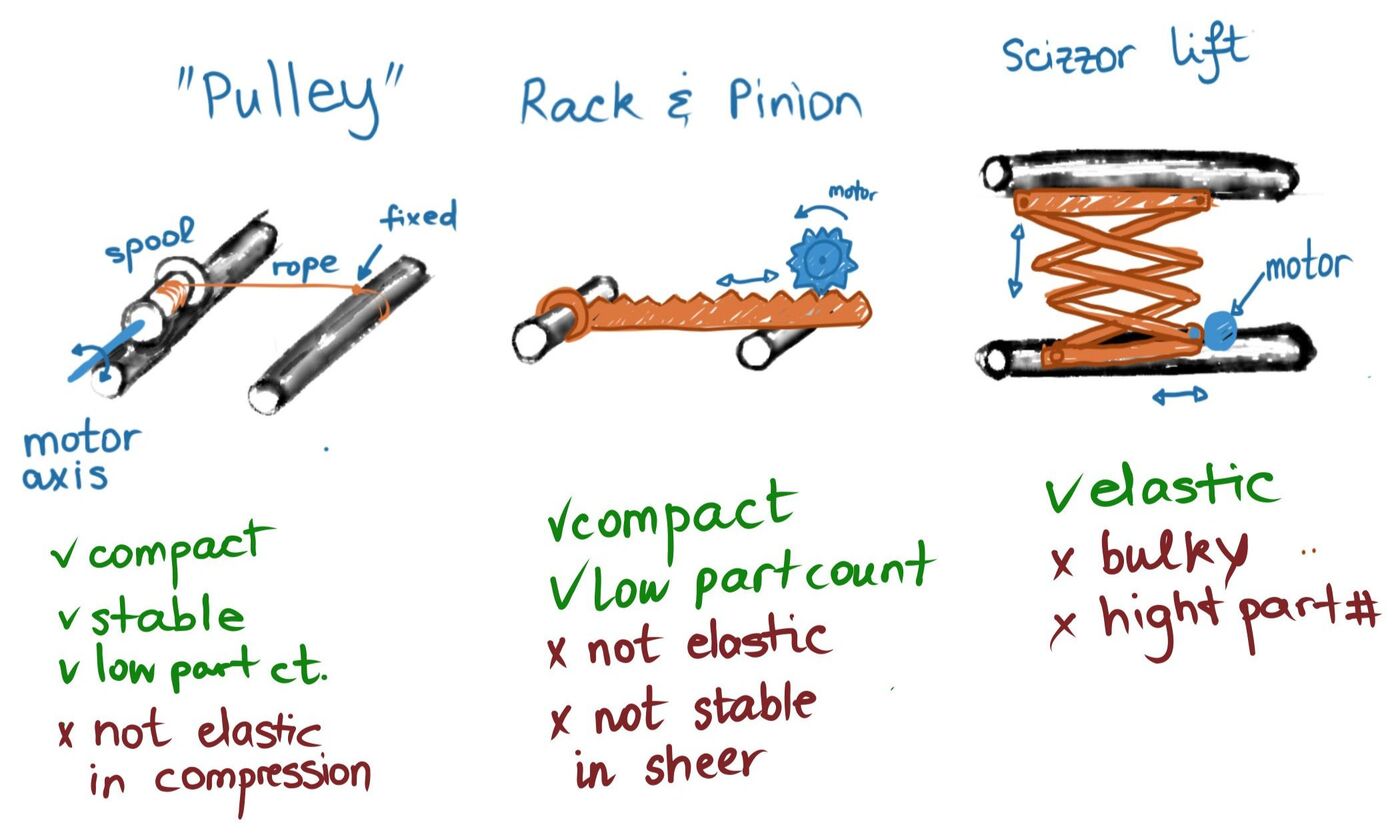
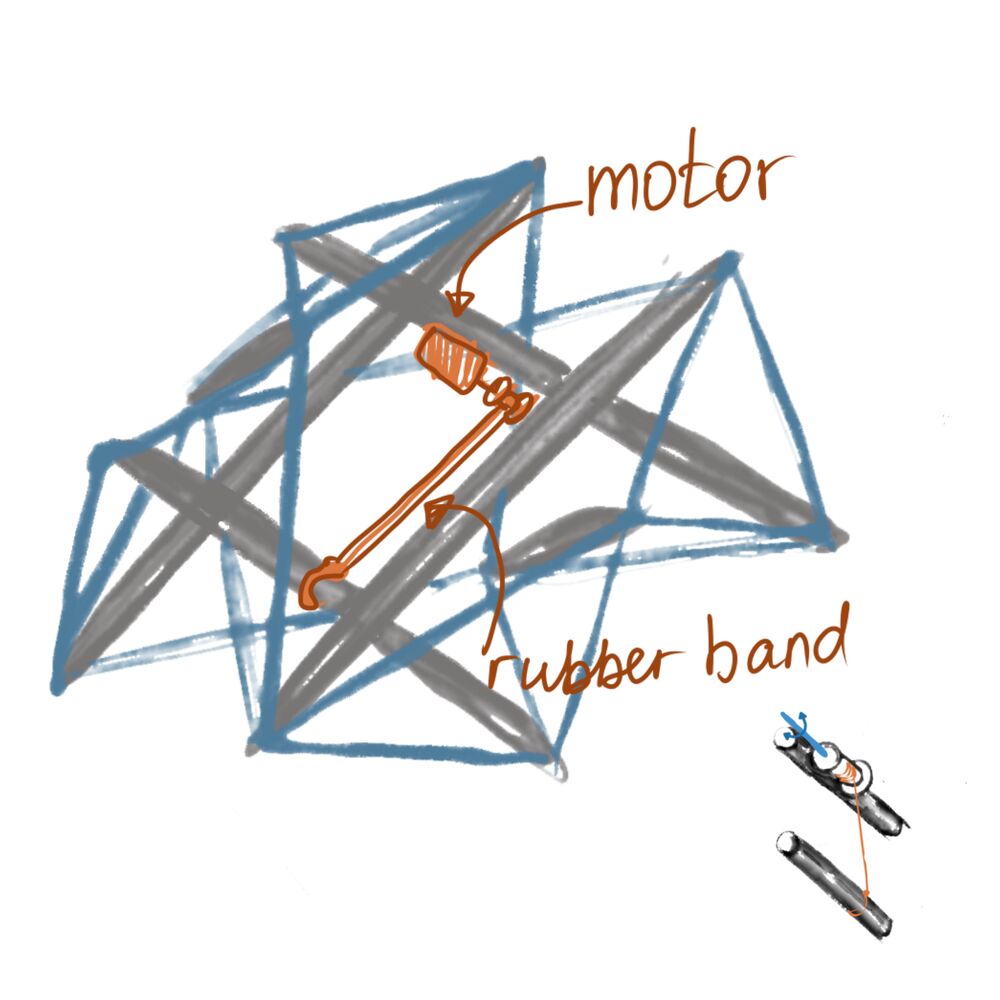
- MATLAB tensegrity models to measure stress and strain
- 3D printing, LEGO electronics and Arduino to build and control tensegrity robots
- MATLAB code to generate custom tensegrity structures from given constraints (in progress)