Tabletop Lathe
Led a team of 6 in the rapid design and fabrication of a tabletop lathe with sub 50 micron repeatability, on a $200 budget, in 3 months.
Tools: SolidWorks, FEA, Tolerance stacking, DFM, Waterjet, Stress analysis
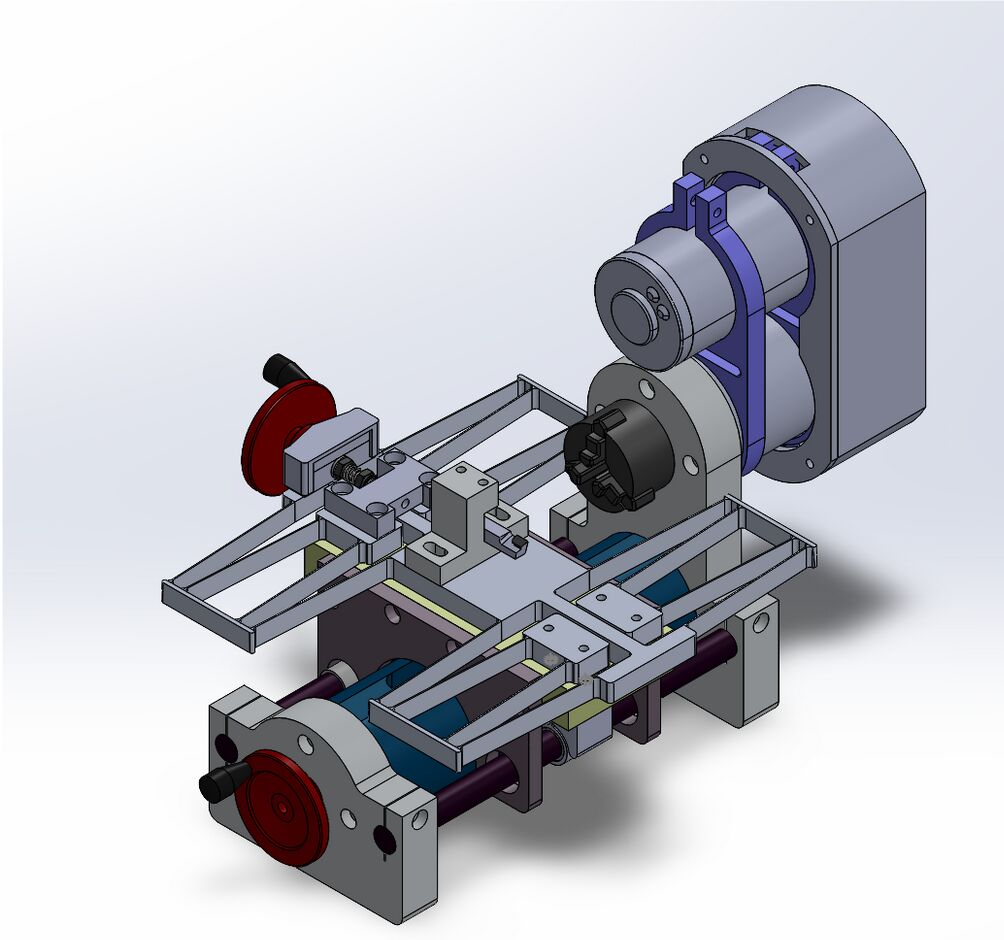
Led a cross-functional team of 6 in the rapid design and fabrication of a tabletop lathe, navigating tight time constraints to make a lathe with sub 50 micron precision in 3 months, on schedule.
I also fabricated the flexures, the rail flexure assembly and the belt transmission, all on a $200 budget.
This project was done as part of 2.72 Elements of Mechanical Design under Prof. Marty Culpepper at MIT.
Key challenges
- Define key design requirements (DRs) for each sub-assembly: spindle, cross-slide, lead screw
- Design and fabricate each sub-assembly within the defined DRs
- Model and measure each sub-assembly to demonstrate performance within the DRs
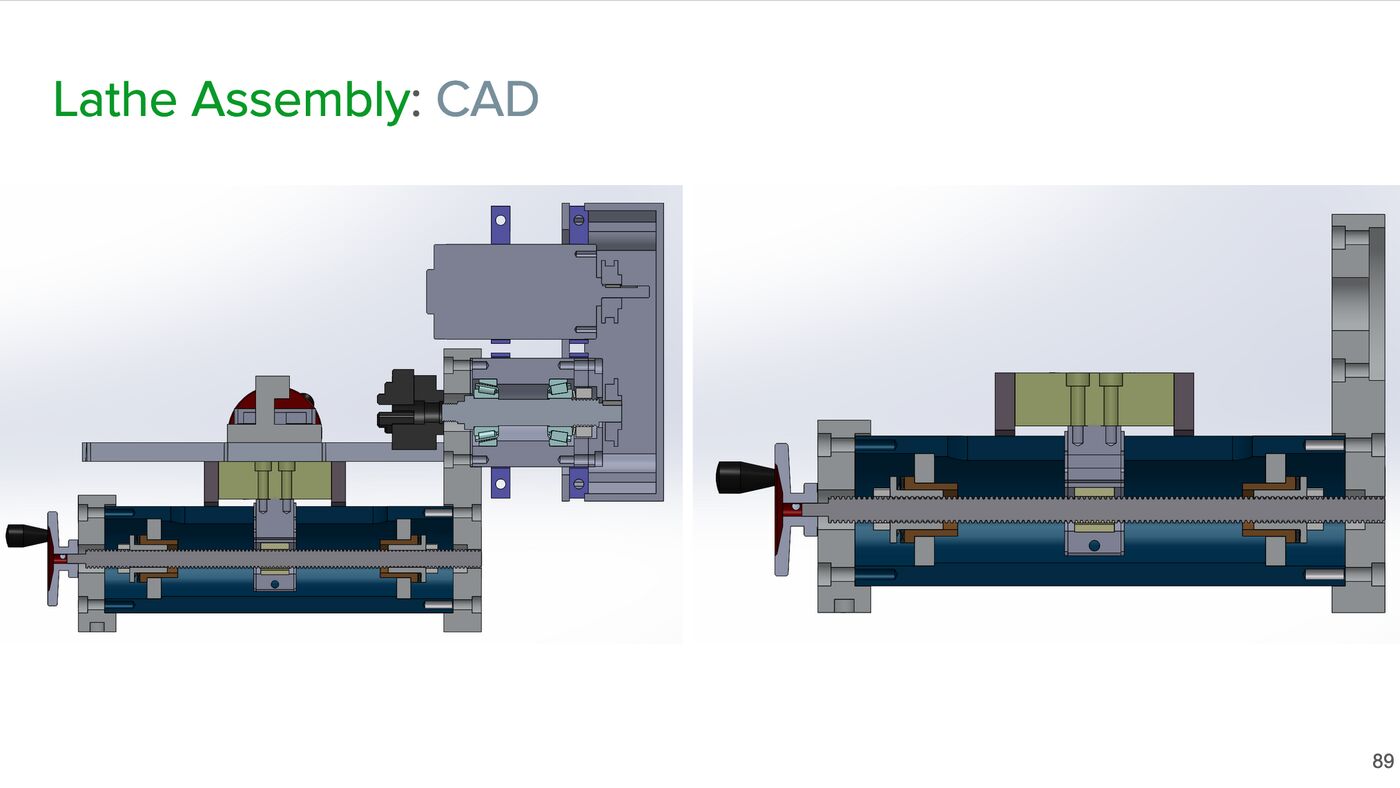
CAD of the lathe assembly in SolidWorks.
Spindle
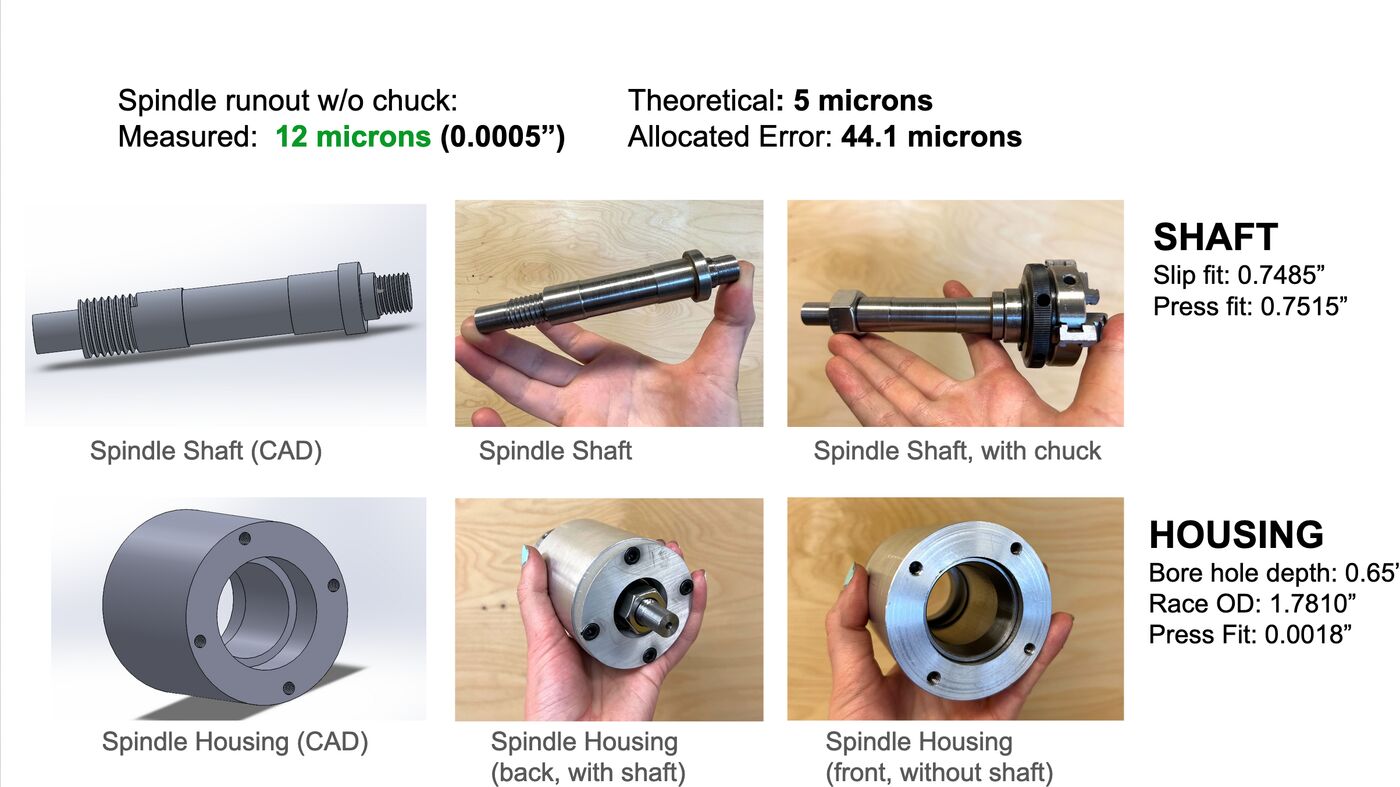
Total allocated error for the spindle was 44.1 microns out of the 50 micron DR, since the spindle was the most complex contributor to radial error.
The spindle shaft was constrained by a pair of tapered roller bearings, preloaded with wave springs (Belleville washers were also considered).
Cross-slide
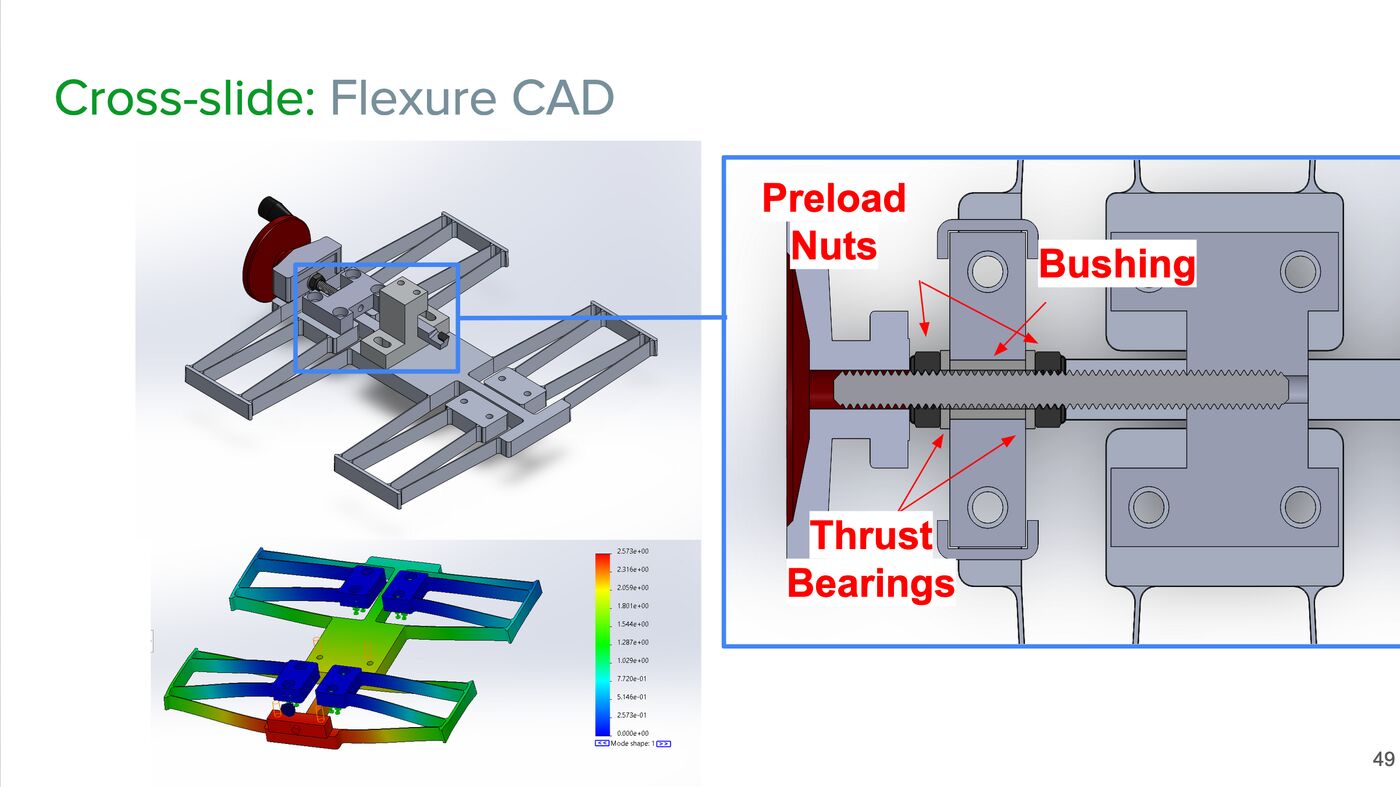
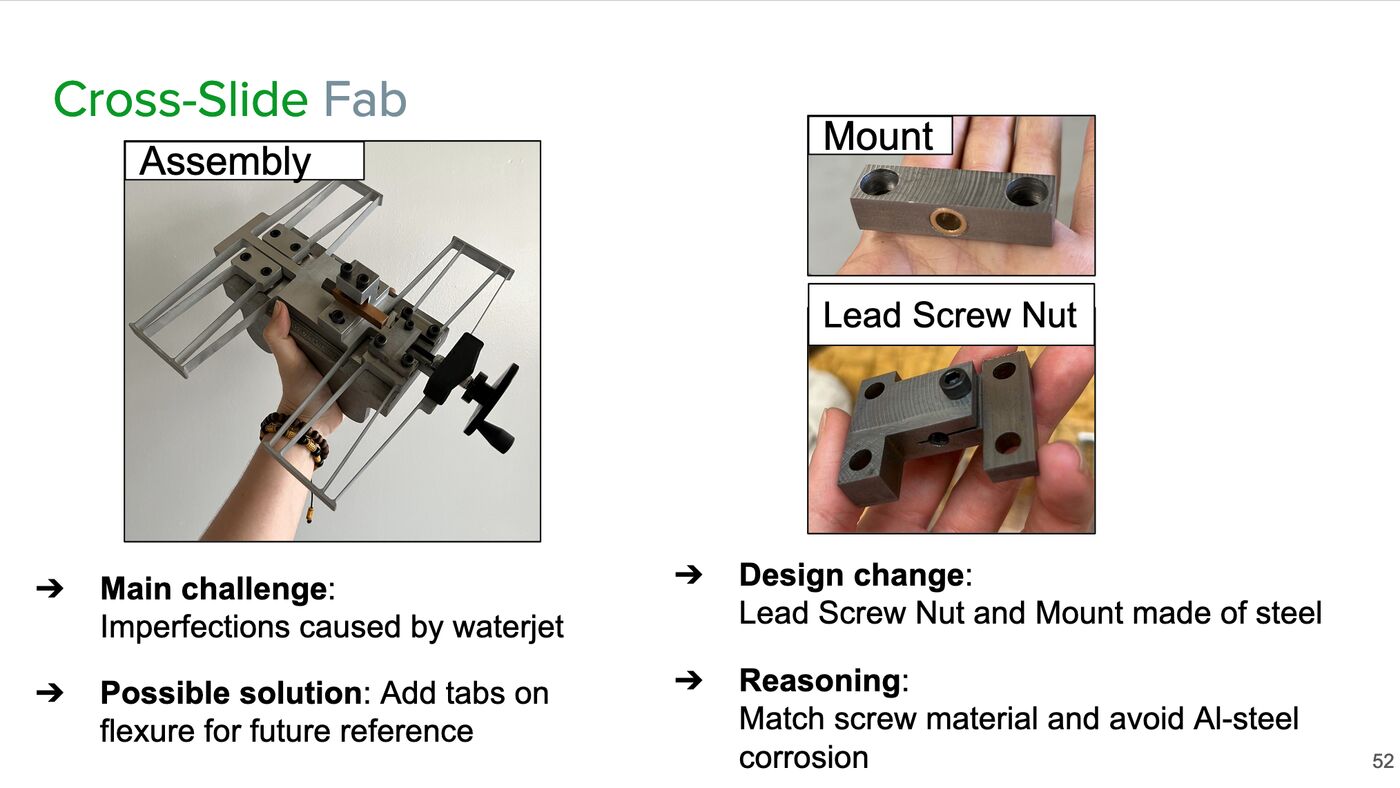
A flexure was used to minimize errors and vibrations during cutting. The flexure design was optimized in SolidWorks FEA and cut on a waterjet.
Assembly and error stacking
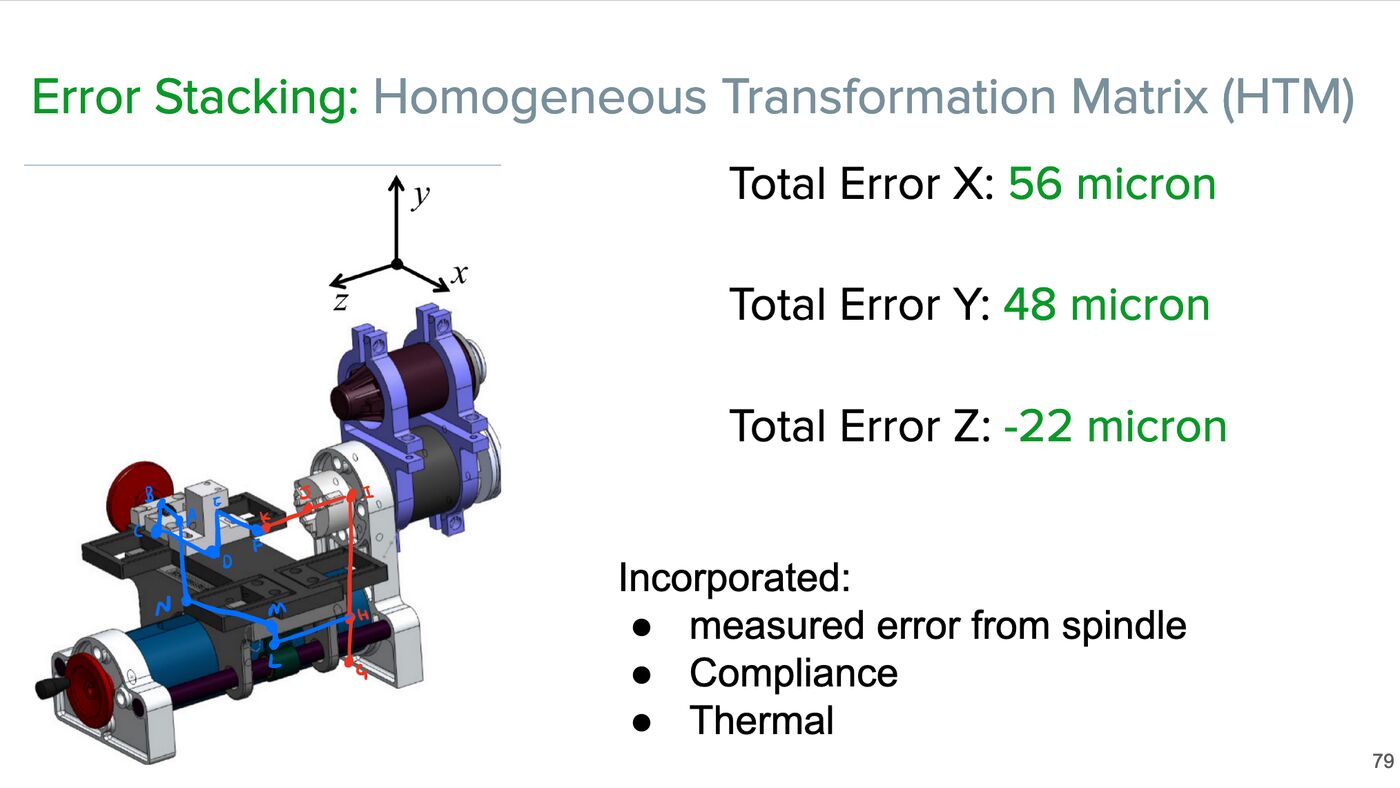
Homogeneous transformation matrices (HTM) were used to model error stacking across the assembly, and total error was evaluated continuously as the design developed.
Cutting in action
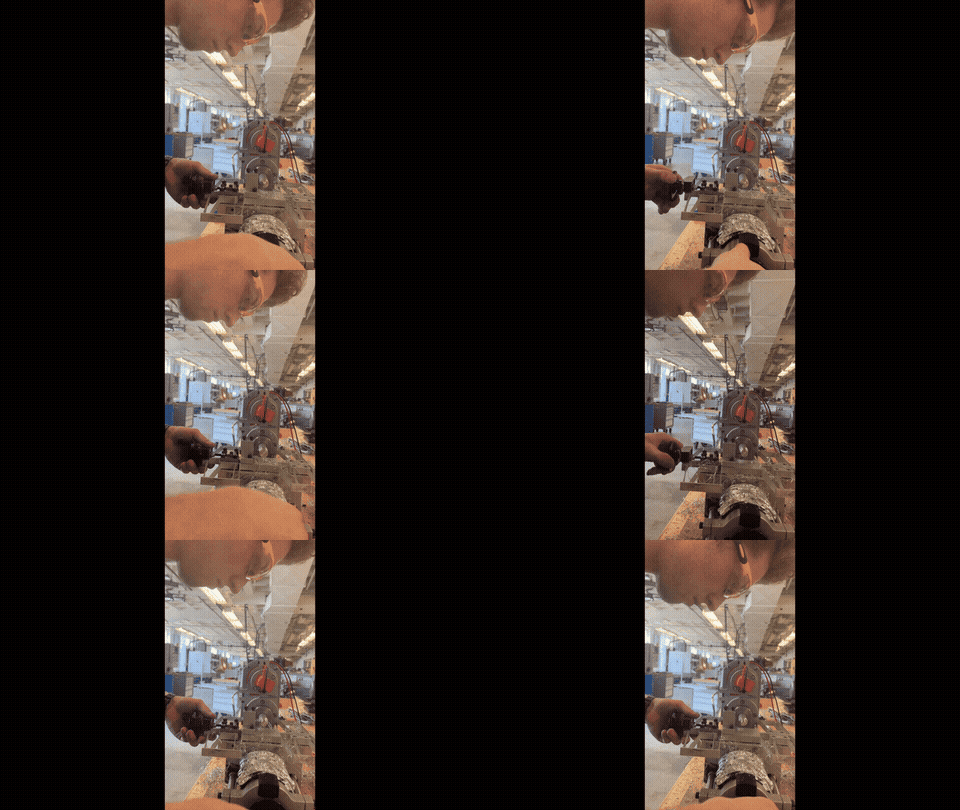
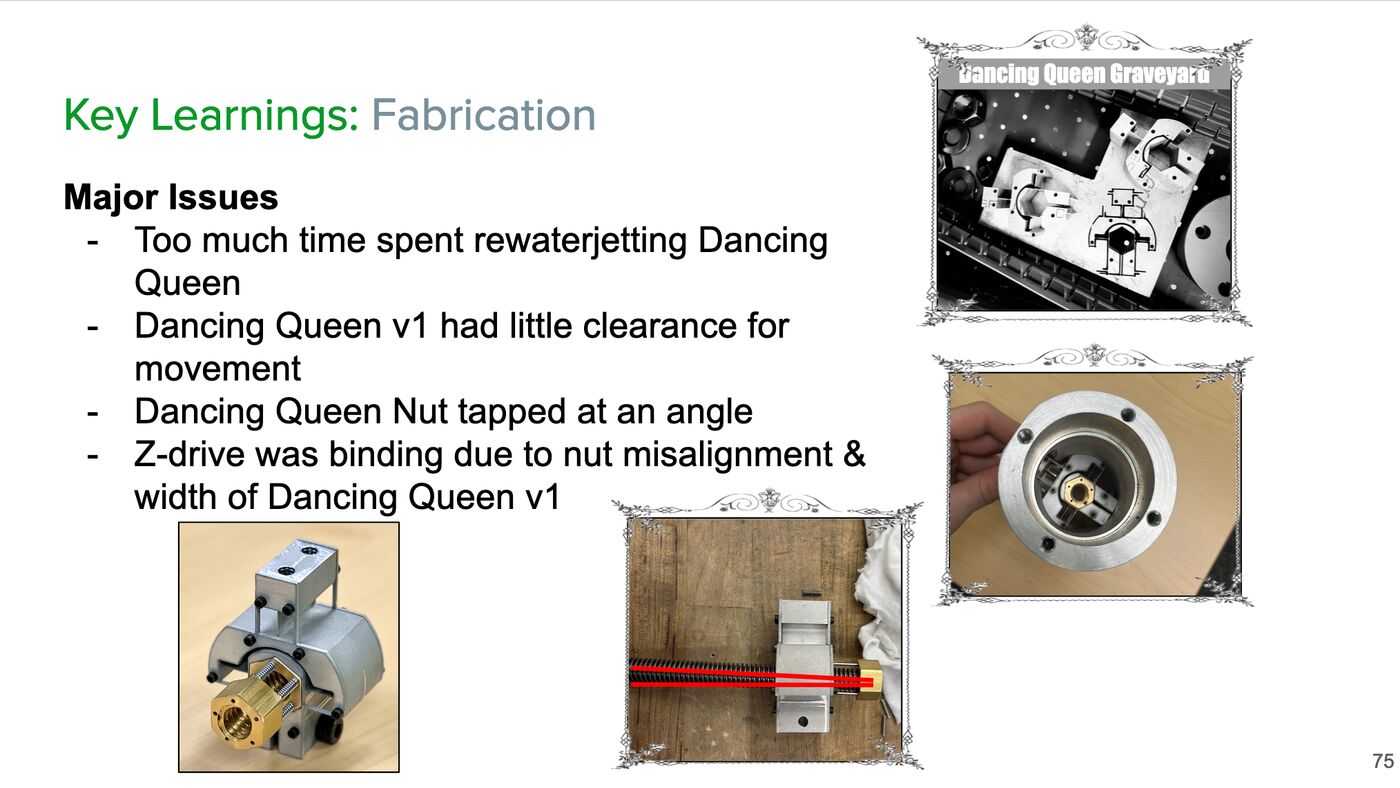
Some of the fabrication learnings (and bloopers):